
Hamburg
An interview with Tilman Kriesel
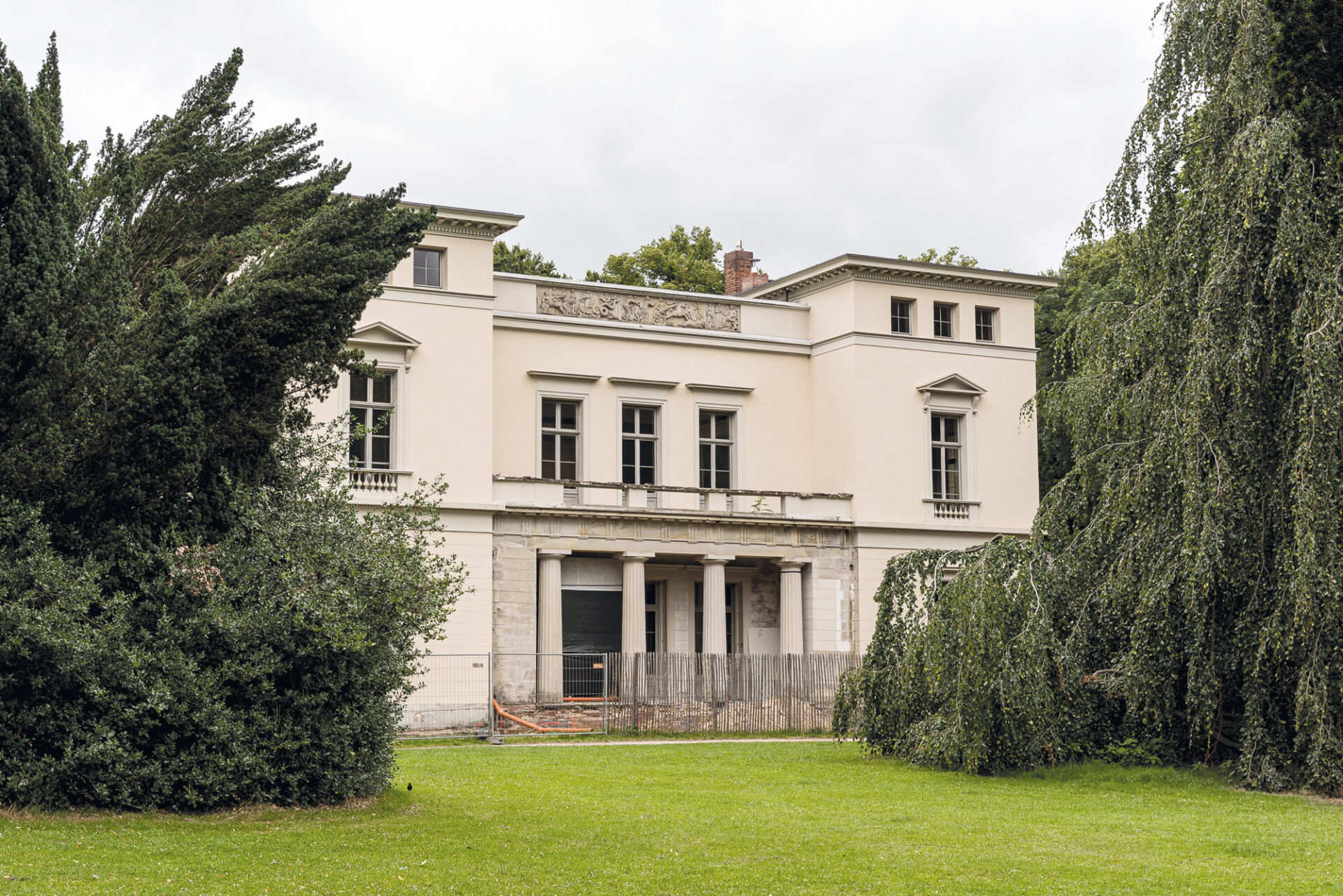
The development of the Katharinenhof is characterised by the interplay between design aspirations and technical feasibility. Whilst Tilman Kriesel, acting on behalf of the client, shapes the vision and overall direction of the project, we oversee the complex implementation process and ensure that ideas are transformed into a feasible and sustainable concept.
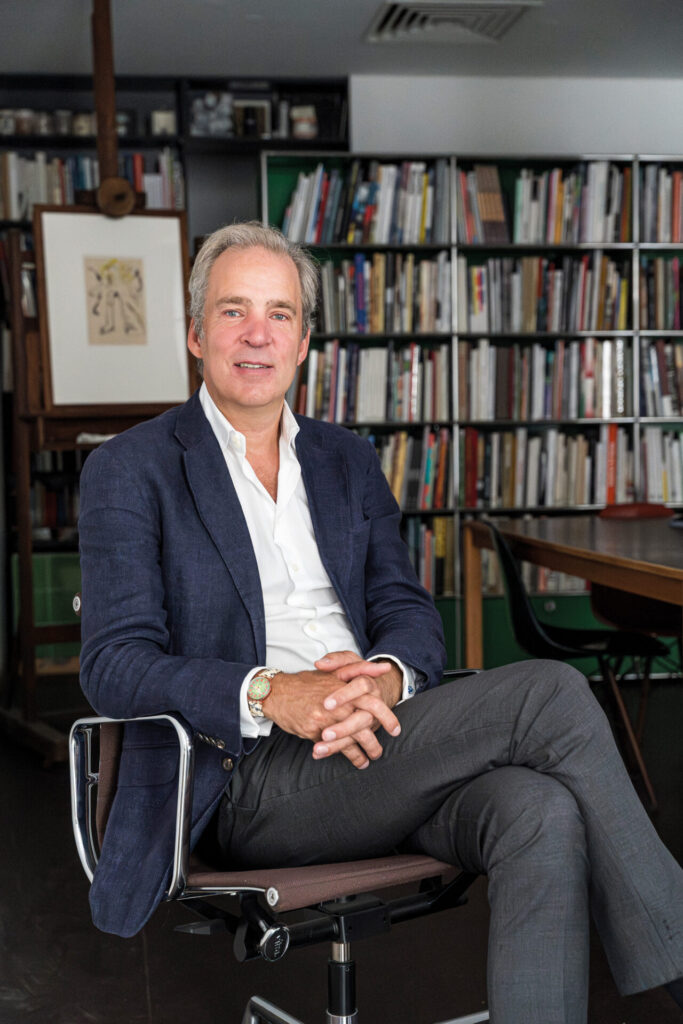
Tilman Kriesel, Managing Director of TKA GmbH, Hamburg.
P. Müller (WBRE): The Katharinenhof is being transformed from a listed manor house into an art gallery. What particularly appealed to you about this project?
T. Kriesel: My involvement in this project stemmed primarily from my personal contact with the client himself. I am deeply impressed by his personal approach and his motivation to create something so visionary, and then to share it with the public. Here, an architectural monument meets innovative spirit, expressed through contemporary art and culture, in many different ways. The cosmopolitan spirit that once characterised the district of Blankenese
is thus being revived. I am grateful to be able to contribute to this development. A project is only ever as good as its client.
You are both an independent art consultant and a client consultant – how did that come about?
My grandfather laid the foundations for the Sprengel Museum in Hanover. Inspired by this, I remain actively involved to this day in a wide variety of roles and institutions within the global art world. Professionally, I pursued a traditional career as a graduate engineer in architecture for many years, until I was eventually drawn to single-family offices on the client side, where I was able to make my architectural contribution most effectively. I eventually set up my own practice as a client representative, but quickly realised that the process of developing a client’s vision is essentially identical to the process and requirements involved in supporting a collector in building their collection. My clients are often clients who collect art, or art collectors who are building. I advise both with equal passion and independence.
Could you describe these parallels in more detail? What motivates you, and how can art and architecture benefit from one another?
Buying art and building a house – anyone can do that, in their own personal way. But to create something truly meaningful, one needs an individual approach that, in line with a carefully considered strategy, crystallises into a vision. Ideally, such a vision is developed for a specific location and precisely for a defined purpose, and is not realised solely for one’s own sake. Good architecture pays for itself in the long term just as much as truly high-quality art. Both inspire people far beyond one’s own taste and boundaries – this is how value is created, whilst others are still talking about the price. In addition to the budget made available, access ultimately remains crucial – both to high-quality art and to a network of suitable project partners.
Could you illustrate this with some examples?
It is not without reason that architecture is also regarded as an artistic discipline. As an architect, I build houses as if they were collections in which others live: I organise them, construct them or manage them. I have drawn on my experience as a jury member in museum design competitions, repurposed buildings that shape the cityscape in accordance with heritage conservation principles, and most recently completed the refurbishment of a landmark building at Oxford Circus in London, which was crowned with a penthouse for an art collector. At times, I succeed in using the impact of suitable works of art to transform architectural shortcomings into assets – in England, this is aptly referred to as ‘placemaking’.
Among other things, you advise collectors, project developers and companies. In your view, which aspects are often underestimated when developing arts and cultural venues?
Kulturstandorte sind auch funktionale Betreiberimmobilien: Alles, was an wirtschaftlichen, technischen und gesetzlichen Anforderungen zu berücksichtigen ist, muss auch hier „kuratiert“ werden. Besondere Herausforderungen, die frühzeitig zu berücksichtigen sind, ergeben sich aus dem internationalen Leihverkehr und dem neuen klimatischen Bewusstsein – und müssen zugleich vor dem Hintergrund einer sich wandelnden gesellschaftlichen Akzeptanz stetig überprüft werden. Oft besteht die „Kunst“ allein schon darin, ein komplexes Bauvorhaben zielführend zu finalisieren.
What opportunities do you see for the Katharinenhof if architecture and the preservation of historic buildings work in harmony with art and culture, as intended?
The ‘Kunsthaus Baurs Park’ is to be created: a private institution which, on the one hand, tells the story of a manor house and the layers of history that continue to shape it to this day, and, on the other hand, creates a private space that looks to the future and opens itself up to society. We honour what has been preserved, accept the traces of the past and contrast them with art. To this end, we must thank the new owner for his cosmopolitan vision and his patronage, work with the Historic Buildings Authority to develop sustainable solutions and, last but not least, support all those who will bring their ideas to life at this special place in the future.